
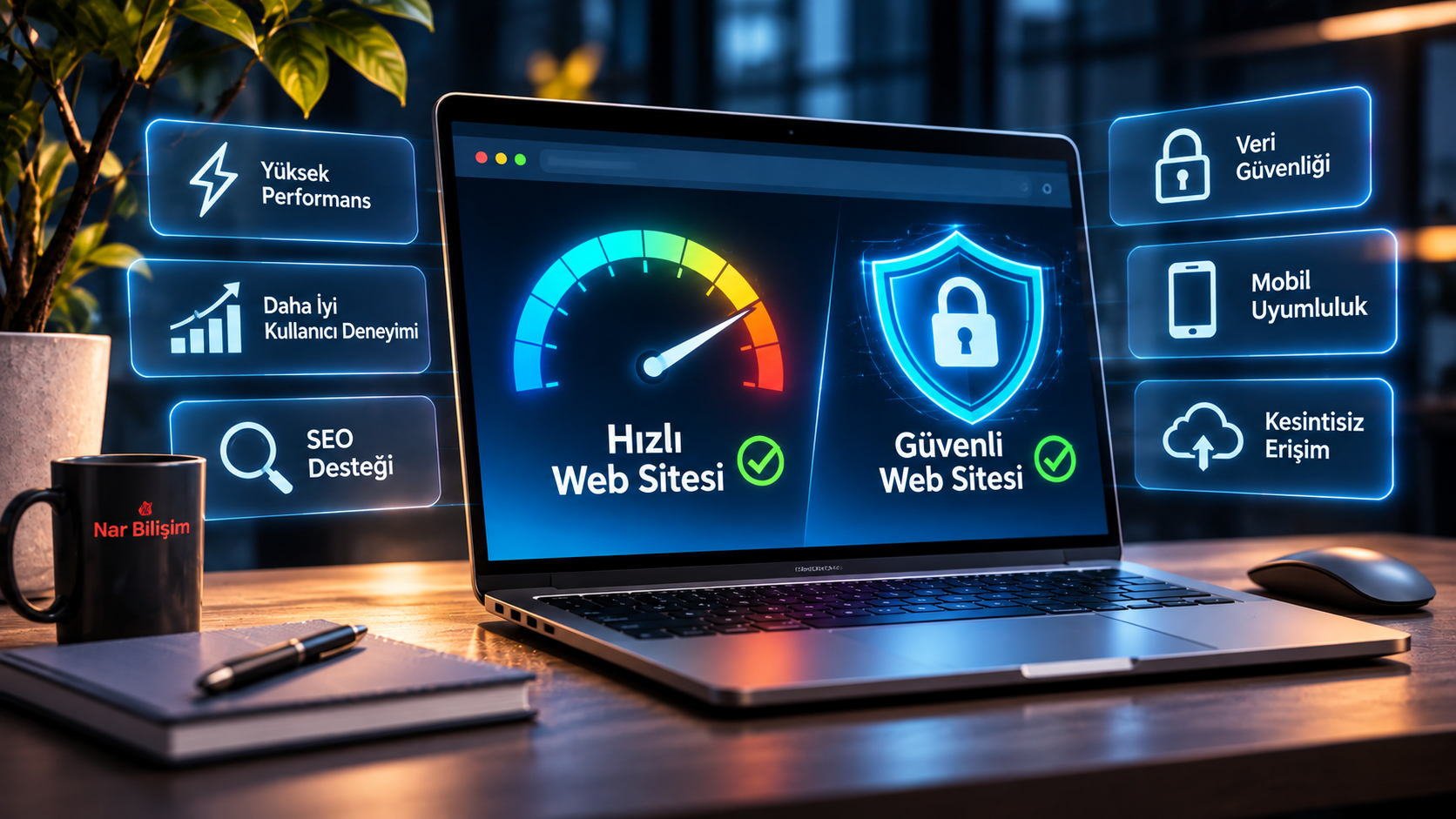
Users expect an understandable design, fast access, and a secure experience when interacting with a website. Slow-loading pages, unexpected layout shifts, or security warnings can cause visitors to leave before completing an action. Therefore, performance and security should not be treated as features added at the end of the web design process, but as essential components planned from the very beginning.
Why Is a Fast Website Important?
A fast-loading and smoothly functioning website helps users find the information they are looking for more easily. Delays can negatively affect the user experience, especially on conversion-focused pages such as e-commerce platforms, quotation forms, and contact pages.
-
Enables users to navigate between pages more smoothly.
-
Makes product, service, and contact information easier to access.
-
Reduces friction during processes such as form submissions and purchases.
-
Supports a professional and trustworthy brand image.
Does Website Speed Affect SEO?
Yes. Google uses page experience signals in its evaluations; however, speed alone does not guarantee higher search rankings. Content relevance to user search intent, quality, website architecture, and other ranking systems are also important. Performance improvements should primarily aim to enhance the real user experience.
Core Web Vitals: Current Performance Metrics
Core Web Vitals help measure real users experiences in terms of loading performance, interactivity, and visual stability. The commonly recommended thresholds for a good experience are:
-
LCP (Largest Contentful Paint): 2.5 seconds or less for the main content to become visible.
-
INP (Interaction to Next Paint): 200 milliseconds or less for responding to user interactions.
-
CLS (Cumulative Layout Shift): 0.1 or less for unexpected layout shifts.
These metrics should be evaluated using real user data whenever possible, with mobile and desktop experiences analyzed separately. Google PageSpeed Insights, Lighthouse, and Search Console can be used for this assessment.
Why Is Website Security Essential?
Websites may process data through contact forms, membership areas, and payment transactions. A secure development approach contributes to data protection, service continuity, and user trust. Businesses processing personal data should ensure that their technical security measures comply with applicable regulations and their own risk assessments.
Key Considerations for Fast and Secure Website Design
Optimized Code and Images
Reducing unnecessary JavaScript and CSS resources, using appropriately sized images, and adopting modern formats such as WebP and AVIF can reduce page load times. Lazy loading should be implemented appropriately.
Mobile Compatibility and Accessibility
Responsive design, touch-friendly interfaces, readable text, and accessible navigation elements improve the mobile experience. Google primarily uses the mobile version of a website for indexing.
Hosting, Caching, and CDN
Appropriate server resources, properly configured caching policies, and a Content Delivery Network (CDN), when necessary, can improve response times and website stability.
HTTPS and Secure Data Transmission
HTTPS, supported by a valid TLS certificate, encrypts communication between the browser and the server. However, HTTPS alone does not eliminate all website security risks.
Updated Software and Access Controls
Content management systems, plugins, and server components should be kept up to date. Strong authentication, multi-factor authentication when necessary, and the principle of least privilege should also be implemented.
Backups, Monitoring, and Security Testing
Regular backups that have been tested for restoration, error log monitoring, security headers, and periodic vulnerability assessments help ensure service continuity.
Benefits for Businesses
-
A smoother user experience and fewer technical disruptions.
-
Greater conversion potential across quotation, contact, and purchasing processes.
-
Stronger brand trust and digital service quality.
-
A maintainable, measurable, and scalable technical infrastructure.
Conclusion
Fast and secure website design is not merely a technical preference; it is the foundation of sustainable digital performance. Achieving good results requires design, software development, hosting, security, and monitoring processes to be considered together. SEO success must also be supported by high-quality, user-focused content alongside this technical foundation.
At Nar Bilişim, we consider performance, security, and user experience together in our corporate web design and custom software development projects. You can explore our web design solutions or contact us to build a website infrastructure that is tailored to your business needs, measurable, and scalable.
Editorial Note: The original publication date of the existing article should be preserved. A separate last updated date should only be used when the content has genuinely been updated. The datePublished and dateModified structured data fields should reflect this distinction. Internal links should direct visitors to the actual URL of the relevant Nar Bilişim service page.
